
Are you a cat or a dog person? There is a spectrum. This question is not black or white. There is a huge grey area. Both kinds of pets have their own unique traits and both have a lot to offer. First of all, there is the obvious difference: they look different. If you saw a cat, you would know that it is a cat, and vice versa. But then, there are the not so obvious differences. This comes in forms of body language, nature, and animal behavior in general.
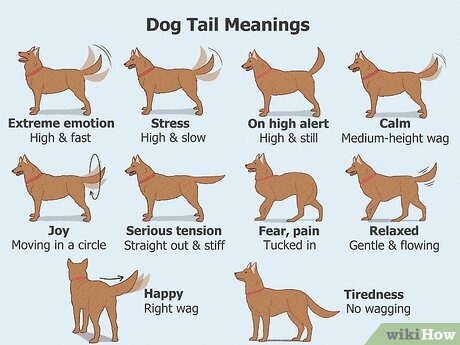
Let’s start with doggies. Dogs mainly communicate with their ears and tails. Typically, when we see a dog wagging their tail, we think they are happy. This is not always the case. The height, speed, and overall movement of the tail show different emotions. Let’s first start with the neutral tail. A neutral tail is when the dog is relaxed and comfortable. The dog’s tail is often straight out from its body and relaxed. It is best to know what your dog’s neutral tail is because each dog is slightly different. Once you understand what your dog’s neutral looks like, you can then understand the other emotions they are feeling. In the visual below, it shows the different speed and height of the tail depending on the emotional status of the dog. The first figure states that a high and fast tail wag means the dog is experiencing extreme emotions. This doesn’t always mean happiness, this could mean stress, sadness, anger, etc. Any kind of extreme emotion.
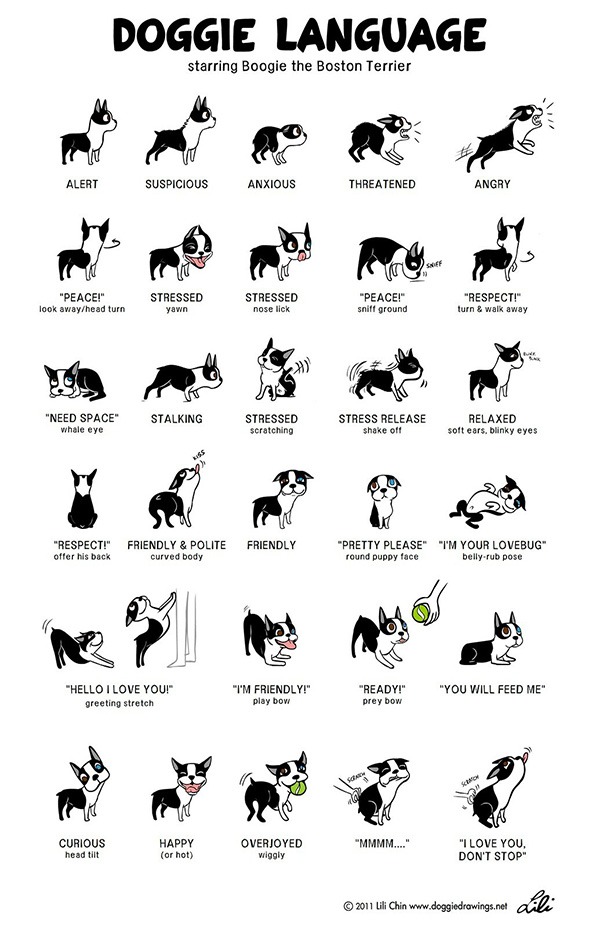
Even though the tail is extremely important, it doesn’t give us the full story. The dog’s ears and posture also play an important role in the story of your dog. The visual below demonstrates different stances the dog takes and the position of its ears depending on its mood. The visuals given are just the diving boards to understanding your furry friend. When deciphering what your dog is telling you is very dependent on your own understanding of your puppy. The better you know your dog, the easier it becomes to understand what they are communicating.
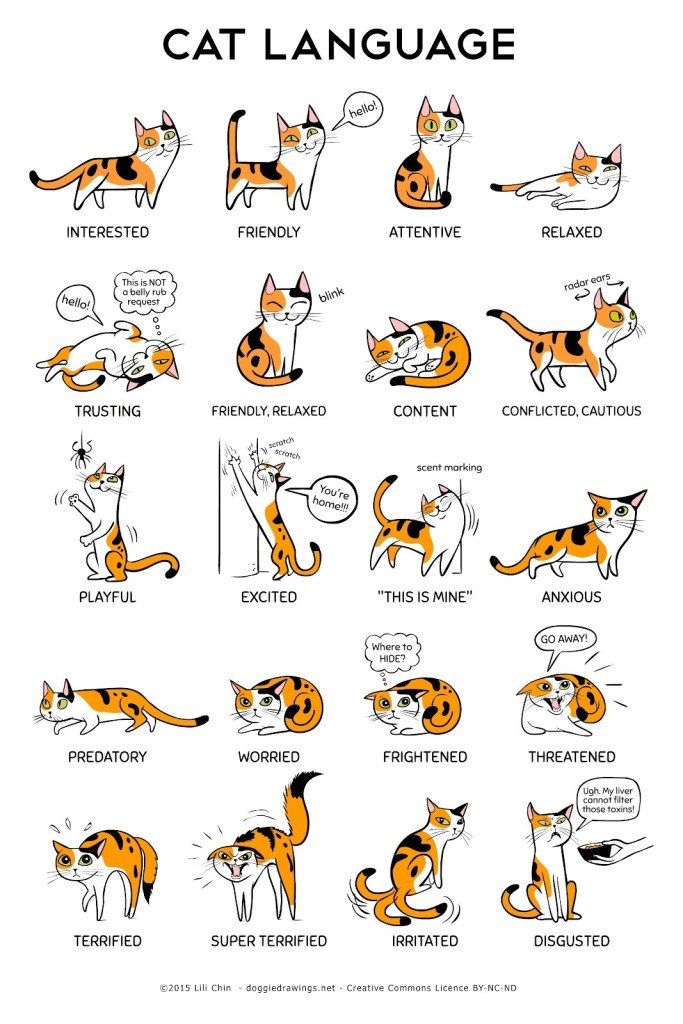
For many people, understanding cats’ body language is difficult. This is often because we understand dogs a little bit more, but the two pets’ body language is quite different. As many know, cats don’t wag their tails in the same way that dogs do. Cat’s tails often flick or slightly sway. The more a cat’s tail moves, the more uncomfortable they become. Think of a cat like a balloon. Petting a cat gives that cat energy, similar to how blowing up a balloon gives the balloon air. The more energy the cat has, the more they need to release it, this may come in a slap, hiss, bite, or purely just walking away. Now, picture a cat’s tail as the neck of a balloon. When you release the balloon, the neck moves very fast. The more air in the balloon, the faster the neck moves. This is the same for cats. The more energy you give them, the more their tails move.

Once again, the posture and ears help tell the complete story. Typically, when a cat’s ears are pointing up and facing forward, the cat is experiencing positive emotions such as content, joy, relaxation, etc. When a cat’s ears are flat, creating airplane ears, the cat is feeling stressed, aggressive, and threatened. I cannot stress enough how important knowing your own pet is to understanding their body language. It is imperative to watch your cat and see how the react to certain stimuli and their body language throughout the interaction. Once you understand your cat, you and your furry feline will be able to have an amazing relationship.

 Skyline Learning Center