
Over the past (almost) four years at Skyline, I’ve taken 11 AP courses. While that’s only a fraction of the AP courses available to students, it does mean that I’ve spent most of high school tackling an accelerated workload. Today, I’ll be sharing my experience with each of these courses– what I learned, what challenged me, and how much I enjoyed them. I’ll also be ranking them based on difficulty and enjoyment! For the AP courses that I haven’t taken, I’ll be interviewing a past student to ask about their experience. I hope this helps you in course selection and gives you insight into what to expect from different AP classes!
- AP Environmental Science
APES is typically the first AP course students at Skyline take, in their sophomore year. However, since I took 9th grade Biology online before high school, I ended up taking this class freshman year. The class is incredibly interesting and not too difficult, so it is a good beginner AP course. There’s not much homework; the teachers recommend doing the textbook reading before their lectures but I found I was just fine going into the lectures blind because the content isn’t too complex. The labs and mastery projects offered in the course make it easy to get an A even if you don’t ace every test, and the course is designed for students to be able to work with other students throughout the year. I probably would have enjoyed this class more if I had taken it sophomore year, as there’s a lot of group work involved and I pretty much had to work with people I did not know all year. If you decide to take it, here’s a little tip: if you don’t know the answer, 90% of the time it’s something to do with loss of biodiversity!
- AP US History
Out of all the classes I’ve taken so far, APUSH is BY FAR my favorite course ever. While the students are expected to understand and interpret a ton of content, Ms Ducker does a wonderful job of teaching it. She uses a multitude of methods: class activities, debates, lectures, readings, and more to allow the students to learn and master the content in multiple ways. Nationwide, the curve for the AP exam for APUSH is pretty harsh, but almost everyone in my grade who took the course passed or even got 4s and 5s. The textbook readings can be pretty difficult towards the start of the course, as you’re learning about stuff you’ve virtually never heard of before. (late 1500s and 1600s) However, the course gets easier as the year goes on, as you start to become more familiar with the history. If you plan on taking AP Government junior year, this class would help a lot!
- AP Macroeconomics
AP Macroeconomics and AP Microeconomics are the only 1-trimester APs offered at Skyline. This is a recipe for disaster! The content for AP Macro wasn’t that difficult, but it’s too much content for a term that’s only 12 weeks long. Most people at Skyline have a bad experience with Macro as you fall behind pretty quickly, and it can be hard to keep up with the pacing at the end of the trimester. I would say for this class, you should do a significant amount of work outside of school if you want to keep up with the pacing. In class, you may not have time to cover all the topics, but they will still appear both on the final and the AP exam. Do your homework!
- AP U.S Government and Politics
AP Government was fairly easy and also very interesting. It was never hard to make an A in the class, as there was a combination of projects and tests for the mastery grades. However, there is a good amount of memorization needed to do well in the class and the exam. The systems of government can be complex and confusing at times– you might need to spend some extra time outside of class to make sure you fully understand those. Similar to APES, I took this course one year early when I was a sophomore and I think I would have enjoyed it more if I took it with friends because there’s a lot of group work involved. My advice for people taking this course would be to stay updated on current events, it would be beneficial to understand the implications of what you’re learning in class.
- AP Psychology
I found this class to be super interesting. I enjoyed learning about different aspects of human behavior and social psychology, and the content was not that difficult. However, there is a fair amount of memorization. The mastery assignments alternate from projects to tests unit to unit, and the teacher does a pretty good job of outlining exactly what will be on the test. I don’t have a ton to say about this class as I didn’t end up taking the exam, but most people say it’s fun to take with friends and easy to make an A in!
- AP English Language and Composition
I loved this class! However, do take this with a grain of salt as I thoroughly enjoy reading, writing, and English classes in general. I found it to be the perfect transition from English 9/10 to stricter, more formal writing. The way the class is structured is that you spend one entire trimester on each essay that appears on the AP exam. I liked this, as we had a full 10-12 weeks to understand, practice, and analyze each prompt. This class also helped me a lot with studying for the SAT, because after you do the MCQs for AP Lang, the English section on the SAT seems like child play. If I had any advice for students about to take the course, it would be to take the reading seriously. Not only does reading make you a better writer, but fully understanding books that have bigger ideas and commentary is going to help you a lot for the exam.
- AP Chemistry
This is one of the only classes that I found extremely difficult yet enjoyable at the same time. The content is incredibly complex, and often you’re learning about things you can’t really perceive or have ever heard of. However, I found that the teacher was incredibly good at adapting his teachers to fit the needs of each individual class. We used diagrams, labs, lectures, videos, drawings, discussions, and more to learn the content, which kept me from being bored. One caveat is that almost every year the class falls behind, and the last few units, which are the hardest, end up being rushed. This is just because of the sheer amount of content that needs to be covered. My advice would be to start studying for the exam early so that when March/April comes around you’re focused on mastering the new content instead of relearning the old.
- AP Precalculus
Precalculus was only recently made into an AP, and to be honest I couldn’t really tell how instruction would have been different had I taken the regular or AC level precalc instead. I found the class to be fairly difficult, but the content became easier to grasp once I started doing all the practices/homework in their entirety every night. I didn’t take the AP exam for this course either, as the entry-level math at most universities is Calculus, not Precalculus. My advice to incoming students would be to do all the homework, as the test questions often are nearly identical to the homework!
- AP Biology
AP Bio is definitely very challenging. It’s a ton of content that you haven’t been familiar with since freshman year, and the main form of learning/instruction is lectures. There’s a lot more memorization involved in AP Biology, and it’s not like chemistry or physics where you can sometimes reason your way out using the mathematical formulas. I also find the tests to be pretty difficult, but there are mastery labs to boost your grade. My advice to incoming students would be to try to turn in the practices/assignments when the teacher recommends them to be turned in. This might sound like a given, but Mr R does not penalize late work at all, which I took advantage of at times and fell behind. If you fully pay attention and work properly in class, you shouldn’t have homework!
- AP English Literature and Composition
AP Lit is definitely a big step up from any other English class you would’ve taken at Skyline. It focuses on analyzing literature, so there’s a LOT of reading. Greek plays, Shakespeare, poetry, random book excerpts, full novels, you name it. A lot of the writing is also expected to be much better, almost closer to what would be expected of you from a college professor. I will say that this has helped me tremendously in feeling prepared for college writing. I also feel like the way the teacher walks us through analyzing a piece of literature and its larger implications has taught me a lot, and I’m able to use that to make larger connections to more recent works, current events, or even just interactions with my friends. Sounds nerdy but it’s really cool. If I had any advice for students about to take the course, just like for AP Lang, it would be to take the reading seriously. You will NOT be able to get by with just using SparkNotes or summaries. Read thoroughly, and then read it again if you didn’t understand it the first time!
- AP Calculus BC
I can confidently say that AP Calculus BC will be the hardest math course you would take at Skyline. The content is complex and there’s a lot to cover for the AP exam. The class is designed so that you have instruction or “lectures” pretty much every day and there’s not a ton of time to do the practice problems. If you’re looking to take this course, you should budget a lot of time outside of school to do practice problems and make sure that you understand the content. You’re pretty much responsible for making sure you understand the content. The teacher is very good and is always there to help before school, after school, or during lunches, but you have to be proactive in asking for that help.
- AP Computer Science Principles
AP CSP was the first AP class that I ever took, and it was a great way to get introduced to higher-level courses. I struggled to learn coding independently in middle school, but CSP was structured perfectly to introduce me to Python. The project-based approach to learning the basics allowed students to play around with and get used to how Python works. Because each activity was relatively short, but we had multiple activities per assignment, the repetition made it easy to grasp the language. The mastery creative tasks gave students complete creative freedom, which was motivating and fun. The fundamentals I learned in AP CSP I still use today in my projects and other programming classes, and is a perfect way to get into coding. (Amir Abston, ‘25)
- AP Statistics
Taking AP Stats was a simple exploration project for me. The primary focus was on was exploring statistics and data science of the world. In this regard, I believe the class is well-structured. Each lesson guides us through the intricate process of identifying certain data. The course load is relatively light compared to Calc BC or AP Physics. Notably, there is minimal out-of-school work, even for unit test prep. The difficulty level among students seems to vary. While I found the course more challenging than both Calc BC and AP Physics, the consensus is that it is significantly easier than either of those two classes. I recommend AP Stats to people who want to explore the world of data and statistics or for those who are looking for a more laid-back AP subject. (Benjamin Bae, ‘25)
- AP Calculus AB
I was planning on taking BC instead, but there was no space in the class, so I had to stick with AB. Personally, it was the better choice because we didn’t have to rush through the content like BC. I could process the information, and the teacher was supportive. We often have a whole review day before our tests that covers all of the content, and she does it in a fun way. If you are planning on taking Calc AB, I would say the biggest thing is asking questions when you don’t understand things. It’s so much easier to have someone walk you through a problem and then try to do it by yourself instead of struggling for 40 minutes on one step. My other piece of advice is similar to the BC students: do the practice. Most of the calc is repetitive, there are a lot of patterns you can find. However, you can only find the patterns if you do the practices your teacher recommends. (Sanjit Chadha, ‘25)
- AP Computer Science A
I was never the biggest fan of coding, but AP CSA made it fun because the units were connected well enough that there weren’t any knowledge gaps, and it was really satisfying to understand a concept quickly. Between the different units, we gained a lot of insight into how coding is applicable in the real world, and we made games that worked, like Battleship or Tic-Tac-Toe. AP CSA is definitely a good idea for people who want to go into programming or those who just want to dip their toes in the water because it’s not a stressful class, yet you learn a lot. (Adarsh Nadgir, ‘25)
- AP Physics
In AP Physics, the greatest advantage for me is the quantity of practice problems. Although the content is challenging, he provides you with a lot of resources and is always available if you have questions. It’s also very interactive, and a lot of the work is group-oriented so you can work with your friends pretty much the whole year. What’s challenging is that the content itself can be confusing, especially if you don’t have a physics background. I found that I had to study quite a bit outside of school to do well on the tests, and since the tests were short, it was harder to make As on them. But with his correction policy, it’s easy to at least make mastery. If I had to give any advice, I would say do a lot of practice problems outside of school as that’s the primary way to master the material. (Allie Wren, ‘25)
- AP French Language and Culture
Taking AP French was a challenging but rewarding experience. I really enjoyed how the course went beyond grammar and vocabulary, focusing on cultural topics and real-world applications of the language. The most difficult part was definitely the speaking section, not just because I had to respond on the spot, but also because listening and reacting so quickly was tough. My advice for future students is to immerse yourself in the language as much as possible—listen to podcasts, watch movies, and practice speaking regularly. It’s easy to get caught up in perfection, but the more you engage with the language, the more comfortable and confident you’ll become. (Julia Bansal, ‘25)
- AP Spanish Language and Culture
In AP Spanish, I like the smaller class environment. Class size normally fluctuates for this class, but having a smaller class makes us closer, and it’s fun to do discussions and interactive activities in a tighter-knit environment. I think what’s hard is the number of projects that involve reading and note-taking, because a big part of AP Spanish is researching Latin American culture throughout the year and keeping it memorized, and the audios you listen to for the MCQ and conversational speaking are often recordings of very fast-paced native speakers. To incoming students, I would strongly recommend that you watch some Spanish shows to get used to the pacing, and keep your present subjunctive conjugations memorized because Mrs Sastre asks about those the most. (Lillian Cui, ‘25)
- AP Chinese Language and Culture
I took AP Chinese Language and Culture; it was pretty challenging because you learn a lot of vocabulary every week and have to refresh what you’ve already learned constantly. I recommend watching Chinese cartoons or dubbed Disney shows to practice listening skills. It helped me with comprehension speed and was also a nice way to pick up some cultural information in a way that’s digestible for people who aren’t fluent. I took it at a different school, but I think I can speak for most AP Chinese classes when I say that you shouldn’t be fooled by the high pass rate because many people who take the exam are already proficient in the language as native speakers. If you weren’t raised speaking the language, it’s very, very difficult. The biggest tip I can give is to start incorporating the language into your daily life so you can passively study— write calendar events in Mandarin, cook meals with recipes written in Mandarin, or even change the default language of your phone. Be patient with yourself when you make mistakes because Chinese is the most difficult language to pick up for English speakers, and being frustrated is part of learning. If you decide to take it, 加油! (Ava Guenthner, ‘25)
- AP Microeconomics
I took AP Micro when I was a sophomore, and I definitely have a lot of advice for people taking it. Economics wasn’t really my favorite subject, but I did really enjoy how I was able to connect the lessons to my personal life which made it a lot easier to learn. Even though the content was pretty much all new to me, I was able to connect problems to things that I already understood, and that made it easier to study. I also got really close to my table and worked with them very often. It was challenging, though. There’s a lot of content and not enough time to cover it all because we are on trimesters. I also ended up having to self-study for pretty much every topic and ended up putting in probably 4-5 hours a week outside of school. It was also tricky because this class was in the first trimester, so I had to relearn everything before the AP exam. My advice is to look at Fiveable.com and Jacob Clifford on YouTube, they both have a lot of really good resources! I would also say to make notecards for each unit because it will help you study at the time and then later if you’re taking the AP exam. Good luck! (Alicia Dyer, ‘25)
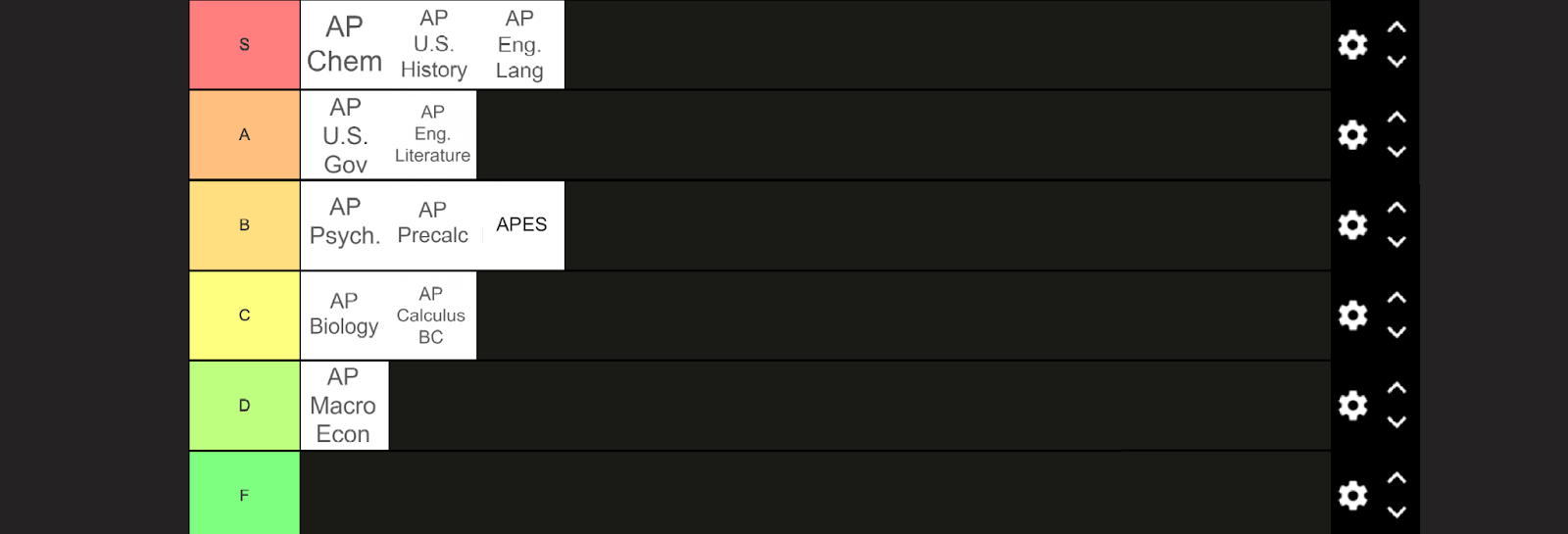
Classes ranked by enjoyment
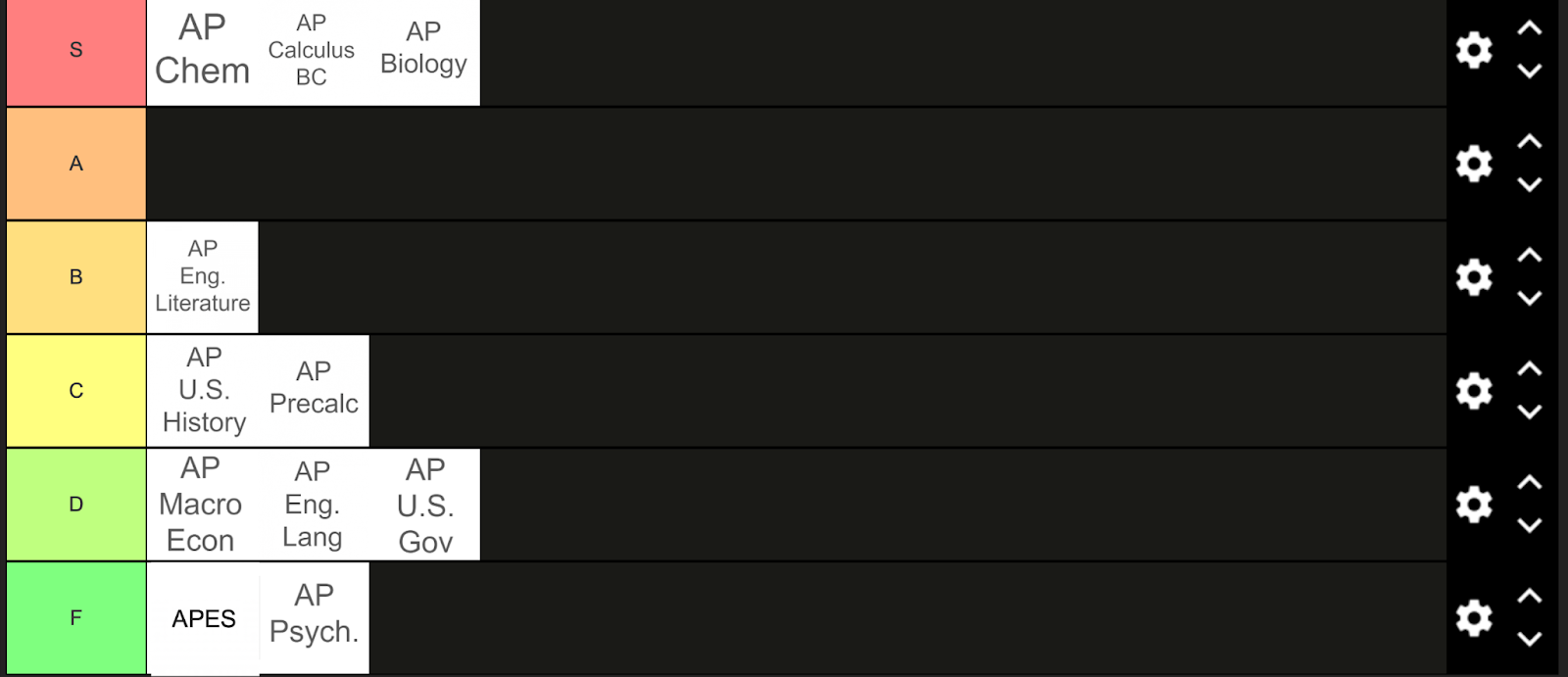
Classes ranked by difficulty

 Skyline Learning Center
This is perhaps the most thorough AP review of the classes at Skyline that I have seen, like ever. Great job Nithila!
LikeLike