
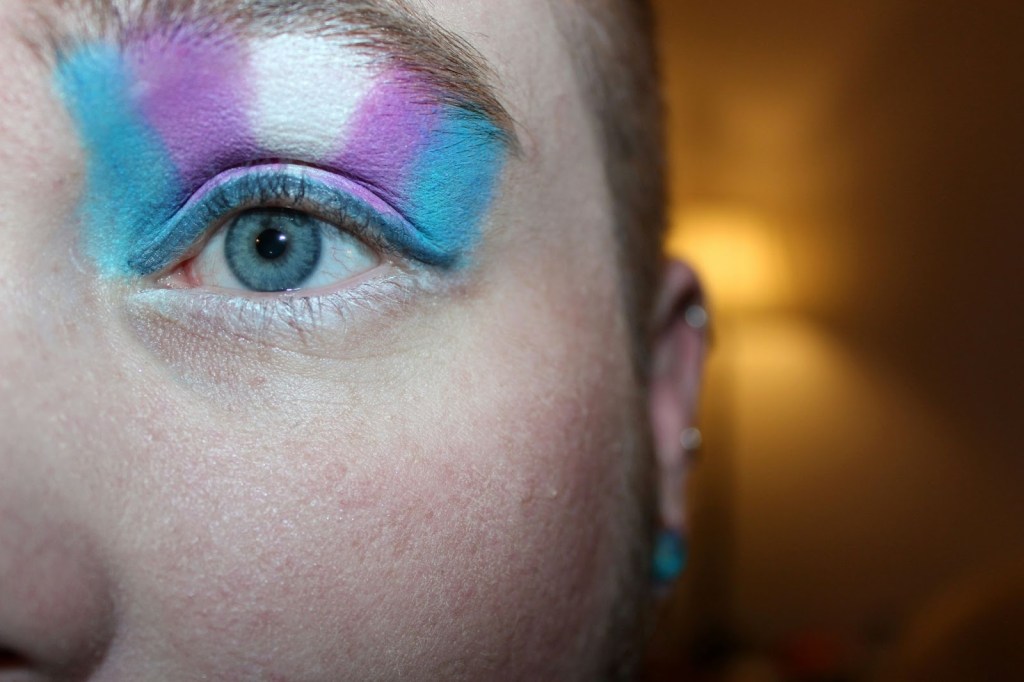
There are many biases held against the transgender community. In fact, no matter how you identify, usually when the word ‘transgender’ comes up, many people automatically think of transgender athletes in sports. Negative or positive, those thoughts are associated with the biases against the transgender community, specifically trans women, and misinformation tends to be spread no matter what ‘side’ you are on. If not misinformation, at the very least a lack of information, and individuals not knowing where to go from there. So, I decided to do my own research, and write down everything in a simple, summarized format, to hopefully help guide those misinformed or confused about this debate. I will even offer a solution for individuals to consider, as through my research I have found solutions are often not given.
Firstly, I will debunk the myths surrounding transgender athletes, as well as clarify a few things. Transgender individuals are real, I would like to state that fact to avoid any doubts readers may develop if assumed otherwise. Although what it means to be transgender has varied through time, cultures, and place, identities that we now label as ‘transgender’ have existed for thousands of years, even before ‘men’ and ‘women’ became the main gender binary. Gender is a developed social construct, as defined by many historians and psychologists, and to add on, sex is not as binary as we originally assumed it was as well.
Human biology is complex, and categorizing it into the two roles of ‘male’ and ‘female’ is futile. According to the article Sex Redefined: The Idea of 2 Sexes Is Overly Simplistic, written by Claire Ainsworth and Nature Magazine, one in a hundred people have at least some form of Differences/Disorders of Sex Development (DSD). This doesn’t mean that one in a hundred people have a visible ‘abnormality’ when compared to the typical XY male or XX female, but there is a difference, whether that be in genetics, cells, or genitalia. In some cases, if a child with DSD is born with both or no genitalia, non consensual surgery is performed to reassign them a more ‘preferred’ genitalia.
Considering that most of this sex binary is enforced, as politicians refuse to acknowledge these new findings, sports are still divided by what the assumed binary is, and transgender individuals are seen as a threat. Science is still unsure on what exactly causes someone to be transgender, whether that be the cause of some form of DSD or something more complex in the brain, but it has never been something the transgender individual can control. Those who oppose transgender athletes in sports, specifically in the sport category they most identify with, often use the argument that trans women would dominate cisgender women, creating an unfair advantage. Not only is the argument concluded through biased opinions on transgender people, but it’s also directly stating misogynistic views. Typically, there are differences between females and males when it comes to muscle mass and growth, yet this doesn’t guarantee an advantage. In fact, most of these differences are supported by the natural steroid testosterone, which influences the distribution of fat and muscle in the body.
In sports, trans women are required to take hormones and suppress their testosterone levels, reflecting the levels typically found in females. If a cisgender woman also contains higher testosterone, in some cases they are required to take suppressants as well.
Trans women do not have an advantage, other than advantages typically seen on cisgender women (ex. longer legs can give you an advantage in basketball), and inequality in sports purely result from the unfair system already in place.
Secondly, there is an extreme bias in political parties when it comes to transgender individuals. Quoting a study done by George B. Cunningham and Kelsey Garrison in 2024, Biases Behind Transgender Athletes Bans Are Deeply Rooted, “…states whose residents have conservative political leanings tend to have more restrictive views on civil rights issues such as immigration, health care and the use of the death penalty. These patterns hold for transgender rights, too.”. Furthermore, another article called Anti-Trans Politicians Use Nazi Strategies to Stroke Fear and Hatred by Mitchell Zimmerman, finds exactly what the title suggests. In the era of World War II, dictatorships were fairly common due to the economic state the world was put under. Germany targeted their Jewish population mainly to “activate loathing” and “[evade] the fact that they had no solutions for Germany’s real problems.” (Zimmerman). As antisemitism within Germany increased, this hate would be used to justify concentration camps and genocidal killing sprees, allowing those in charge to use and maintain their power.
At the time, Jewish people made up less than one percent of the population in Germany, reflecting the same percentage of transgender Americans today. This tactic of targeting a small population, spreading misinformation, and ultimately using them as scapegoats for larger problems can be seen in America today. As more restrictions have been put on transgender individuals after president Donald Trump’s inauguration, and the Republican party has continued to support anti-trans rhetoric, there has been nothing significant done for gun violence, the housing crisis, American wage, and the ever increasing prices for medical care.
States have made laws prohibiting transgender youth from accessing gender-affirming care (including non-surgical treatment), claiming youth are manipulated into having these surgeries and are mutilated in the process. However, as mentioned before, those who have genitalia different from the typical female or typical male (often referred to as intersex), tend to have non consensual surgeries as babies. These surgeries are meant to align them with a more ‘ideal’ genitalia for society, without consideration of how this child may feel in the future. I am fairly certain that those children are not who anti-trans politicians are worried about; instead, they are more worried about maintaining the status quo, and distracting the public from more pressing issues in today’s society.
Lastly, I would like people to also consider the general inequality in sports, and how individuals simply just born different are unable to have a successful career in something they love. Those who may be born taller, larger, or more prone to muscle growth tend to be picked more for professional careers. For example, only 27 NBA players have been at or below 5ft 9in. There is also quite a lot of bias based on race in college recruitment for sports. In Out of bounds: End bias in college admissions for athletes, stated by Lily Skinner, “The National Collegiate Athletic Association (NCAA) released data showing that out of the Ivy League and New England Small College Athletic Conference (NESCAC), 61 percent of the athletes they recruited were white. Within that, sailing recruitment was 100 percent white…”.
Sports are biased by sex, too, and this division tends to create a rift between men and women. Purposeful or not, the division of sports into men and women indirectly states that women are not equal to men, given that women’s sports had to be developed after sports failed to include women in the first place. There are also fewer women role models in sports, as leadership roles tend to be given to men based on this bias.
With the complexities of sex, bias against transgender individuals, and the inequality in sports as a whole, would dividing sports by something other than sex be a viable option? We could combine the two categories of women’s sports and men’s sports into one, but that would still leave physical characteristics being preferred more than actual skill. Dog sports often divide the dogs by size, and wrestling tends to match opponents based on weight (no matter the sex). If sports were to divide categories by weight, size, strength, or any other characteristic, perhaps competition would be more fair. It would also be inclusive, given that anyone could join and face an opponent similar to them. There are three downsides to this solution, however, as there is a possibility these divisions will not be executed properly.
Firstly, BIPOC individuals may start being segregated due to racist bias. If the wrong person were to be put in charge, the bias present may influence their decision into what category individuals should be put, and gender could also influence this bias. Division must be purely science based, and to clarify: eugenics is not a science.
Secondly, an increase in sexual harassment/general harassment may happen if proper protections are not put in place. Women will be subject to misogyny given the current status our society is in, and we must be prepared to deal with that and prevent it.
This solution adds a whole new complicated aspect to sports. I am not qualified in any way to give my opinion on how these categories should be divided, nor how to organize individuals into each one—those who are more experienced in sports and science will be the ones to actually decide how it will work. Though, what I can say and recognize is the problem currently present, and what a potential solution could be. Despite the added complexities, I must say I have not met one sports person who isn’t interested in all the delicate intricacies within sports. This added level of complexity may even help the sports market, given gambling and the potential increase in games, as well as the available slots for sports careers. The only question left to ask is—are we, as a society, even ready for something like this?
Maybe not now, but changing sports for the better will be one step closer to a healthier world… and perhaps it is the challenge we need.
If sports are to be divided into a new category, perhaps a different category depending on the sport, all individuals can participate without worrying about physical characteristics affecting how successful they will be.
Works Cited
Ainsworth, Claire. “Sex Redefined: The Idea of 2 Sexes Is Overly Simplistic.” Scientific American, 22 October 2018, https://www.scientificamerican.com/article/sex-redefined-the-idea-of-2-sexes-is-overly-simplistic1/. Accessed 6 March 2025.
Cohen, Cathren, et al. “Surgeries on Intersex Infants are Bad Medicine.” National Health Law Program, 1 July 2021, https://healthlaw.org/surgeries-on-intersex-infants-are-bad-medicine/. Accessed 6 March 2025.
Cunningham, George B., and Kelsey Garrison. “Biases behind Transgender Athlete Bans Are Deeply Rooted.” Gale Opposing Viewpoints Online Collection, Gale, part of Cengage Group, 2024, link.gale.com/apps/doc/KJZSBU138201730/OVIC?u=lom_accessmich&sid=bookmark-OVIC&xid=7ec5be41. Accessed 6 March 2025.
Nokoff, Natalie J., et al. “Sex Differences in Athletic Performance: Perspectives on Transgender Athletes.” Exercise and Sport Sciences Reviews, July 2023, https://journals.lww.com/acsm-essr/fulltext/2023/07000/sex_differences_in_athletic_performance_.2.aspx?context=featuredarticles&collectionid=2. Accessed 6 March 2025.
Ross, MacIntosh, and Matthew R. Hodler. “U.S. Anti-Trans Laws Won’t ‘Save Women’s Sports.’” Gale Opposing Viewpoints Online Collection, Gale, part of Cengage Group, 2023, link.gale.com/apps/doc/FYVPAD699973511/OVIC?u=lom_accessmich&sid=bookmark-OVIC&xid=aaa63cd8. Accessed 6 March 2025.
Skinner, Lily. “Out of bounds: End bias in college admissions for athletes.” Redwood Bark, 26 April 2024, https://redwoodbark.org/89870/opinion/out-of-bounds-end-bias-in-college-admissions-for-athletes/. Accessed 7 March 2025.
Wikipedia. “List of shortest players in NBA history.” Wikipedia, 2025, https://en.wikipedia.org/wiki/List_of_shortest_players_in_NBA_history. Accessed 7 March 2025.
Zimmerman, Mitchell. “Anti-Trans Politicians Use Nazi Strategies to Stoke Fear and Hatred.” Gale Opposing Viewpoints Online Collection, Gale, part of Cengage Group, 2024, link.gale.com/apps/doc/GOOERR546291981/OVIC?u=lom_accessmich&sid=bookmark-OVIC&xid=5d982e70. Accessed 6 March 2025.

 Skyline Learning Center
This is such a complex issue, especially because some sports even have different rules depending on the gender of the teams. Society is so gender-based, and I wonder if a new solution will be something I even see in my lifetime.
LikeLike